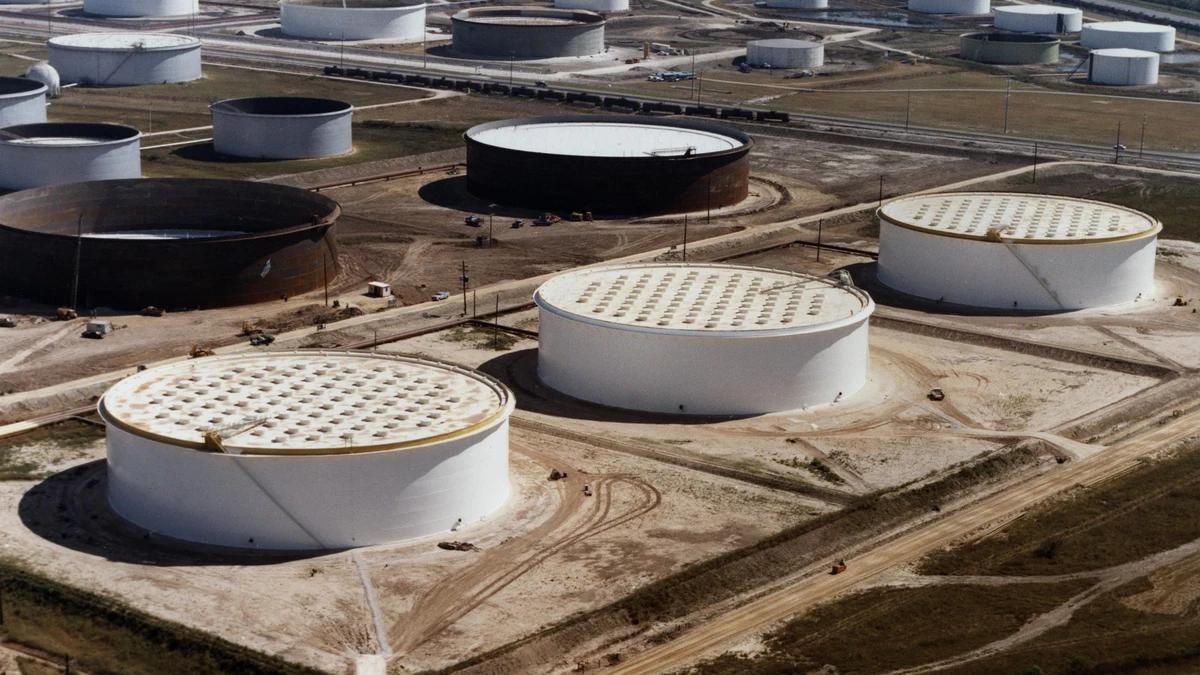
United States energy security metrics entered historic territory on Monday as Department of Energy (DOE) stockpile reports confirmed that crude oil stored within the Strategic Petroleum Reserve (SPR) has declined to 282.2 million barrels. The volume represents just 39.5 percent of the emergency facility’s total design capacity, marking the lowest national inventory level recorded since October 1982.
The multi-decade inventory trough reflects months of continuous emergency drawdown tranches authorized by federal officials to counteract severe global supply dislocations linked to ongoing military strikes in the Middle East and Iranian drone attacks on Persian Gulf energy infrastructure. Over the past twelve months alone, the federal government has deployed nearly 40 million barrels of emergency reserves to stabilize domestic retail gasoline prices and prevent refinery bottlenecks along the Gulf Coast.
Paradoxically, the revelation of record-low reserve buffers coincided with a dramatic plunge in spot energy commodities on global exchanges. West Texas Intermediate (WTI) crude for December delivery plummeted nearly four dollars per barrel on Monday to settle at $85.81, while international benchmark Brent crude tumbled to $91.61 per barrel, retreating swiftly from six-month highs above $117 reached in late October.
Market Optimism Over Maritime De-Escalation Drives Price Collapse
Energy traders attributed the sudden commodity decline to emerging diplomatic developments across the Persian Gulf. Diplomatic communications between Washington, European capitals, and Gulf cooperation partners have signaled that direct Iranian blockades of the Strait of Hormuz—through which roughly twenty percent of global petroleum transit flows—are increasingly unlikely to materialize under current mediation efforts.
"The crude market had built in a massive geopolitical risk premium pricing in a catastrophic regional escalation," noted David Albright, managing director of global energy research at PetroTrends International. "Once intelligence assessments indicated that maritime shipping channels would remain open under coordinated naval protection, speculative hedge fund buyers liquidated long positions, bringing crude back toward baseline fundamental valuations."
Despite the price drop, the depletion of the SPR has ignited sharp political debates regarding the country’s emergency preparedness. Energy analysts point out that while the United States remains the world’s leading oil producer, extracting more than 13.5 million barrels per day, domestic refineries along the East and West Coasts depend heavily on waterborne imports of specific crude grades that the SPR is designed to replace during severe crises.
Refill Mandates Face Fiscal and Supply Constraints
Congressional Republicans on the House Energy and Commerce Committee vowed Monday to initiate legislative hearings into the reserve’s replenishment schedule, demanding that the Department of Energy halt non-emergency drawdowns and accelerate repurchase solicitations. Lawmakers argued that leaving emergency caverns along the Texas and Louisiana coasts less than half full leaves the nation dangerously exposed to sudden hurricane outages or unpredictable overseas conflicts.
However, Energy Department officials highlighted that repurchasing crude during volatile market conditions requires disciplined fiscal stewardship. Under current statutory guidelines, the DOE aims to buy back crude when market prices hover between $75 and $80 per barrel to maximize taxpayer value and avoid bidding up consumer fuel prices.
With domestic oil producers prioritizing disciplined capital return programs over rapid production expansions, rebuilding the reserve to its pre-2022 levels of over 600 million barrels could take between five to eight years. As global supply dynamics remain tightly balanced, the federal government faces a delicate balancing act between maintaining domestic consumer affordability and restoring its premier strategic buffer.