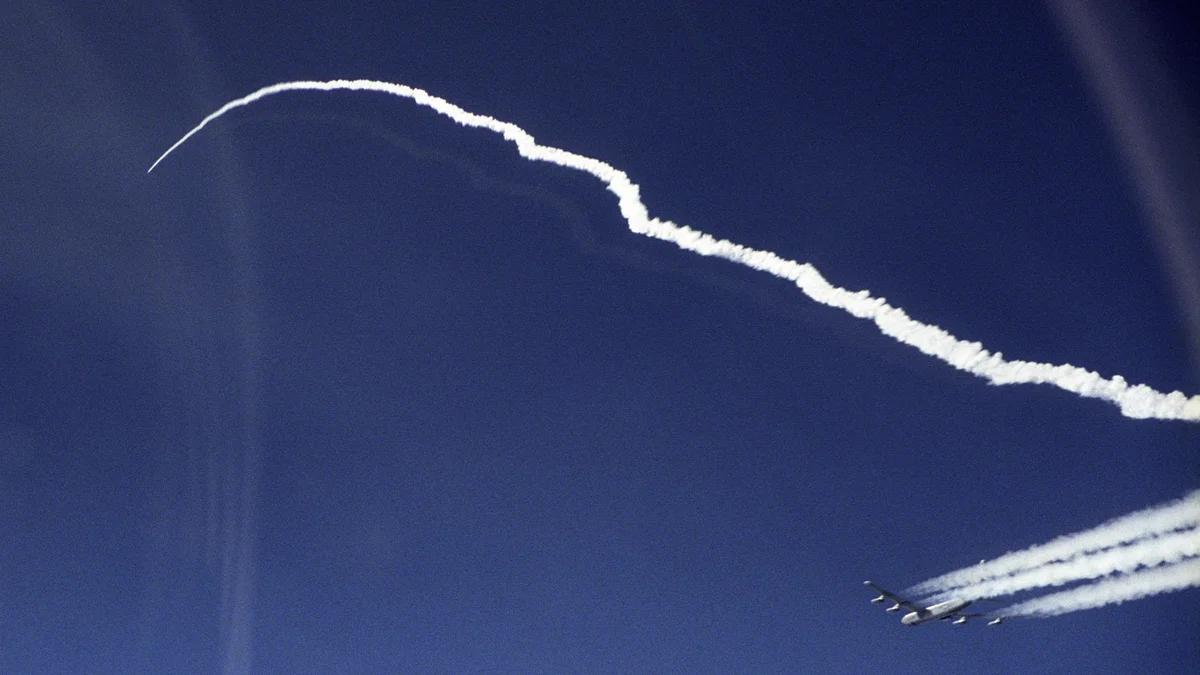
The Defense Advanced Research Projects Agency (DARPA), in joint operational collaboration with the United States Air Force and an industrial coalition led by Lockheed Martin and Aerojet Rocketdyne, announced on Monday the flawless execution of a historic hypersonic flight test over the Pacific Missile Range Facility in Hawaii. The experimental air-breathing vehicle, designated the Hypersonic Air-breathing Weapon Concept 2 (HAWC-2), achieved sustained, powered scramjet cruise flight at speeds exceeding Mach 6—over 4,600 miles per hour—at an altitude of 78,000 feet for more than seven continuous minutes.
The Physics of Supersonic Combustion Ramjets
Achieving sustained, controlled flight inside the atmosphere at hypersonic velocities is often described by propulsion physicists as the aerodynamic equivalent of "lighting a match in a hurricane and keeping it burning." Unlike traditional turbojet engines that utilize spinning mechanical compressor blades to pressurize incoming air, a scramjet (supersonic combustion ramjet) relies entirely on the vehicle's forward supersonic velocity to ram atmospheric oxygen into a specially contoured aerodynamic inlet.
The primary barrier that historically limited scramjet tests to fleeting, five-to-ten-second bursts was thermal degradation. At velocities exceeding Mach 5, atmospheric skin friction generates extreme aerodynamic heating that pushes vehicle leading-edge surface temperatures beyond 3,200 degrees Fahrenheit, quickly melting conventional titanium and nickel-superalloy airframes.
Breakthrough Additive Ceramic Matrix Composites
The breakthrough that enabled HAWC-2's prolonged seven-minute sustained cruise was the deployment of an entirely domestic, 3D-printed carbon-fiber-reinforced silicon carbide (C/SiC) ceramic matrix composite (CMC) thermal protection aeroshell. Manufactured utilizing advanced laser-powder bed fusion techniques at the Oak Ridge National Laboratory, the ceramic material can withstand continuous thermal shock exceeding 3,600 degrees Fahrenheit while maintaining structural tensile strength lighter than aluminum.
"This test proves that air-breathing hypersonic flight is no longer an exotic laboratory curiosity; it is a mature, operational reality," stated Dr. Raymond O'Toole, Acting Director of Operational Test and Evaluation for the Department of Defense. "By utilizing standard jet propellant (JP-10) combined with non-ablative ceramic aerodynamic surfaces, we demonstrated that hypersonic systems can be manufactured affordably at volume utilizing domestic advanced manufacturing lines."
Transforming Global Reconnaissance and Space Access
Beyond long-range strategic defense strike applications, aerospace engineers emphasize that the validation of sustained scramjet propulsion carries transformative implications for civil space access and commercial atmospheric transport. Air-breathing first stages that ingest atmospheric oxygen during the initial 80,000 feet of ascent require seventy percent less onboard liquid oxidizer than traditional chemical rockets, potentially collapsing the cost of launching small satellite constellations into low-Earth orbit by a factor of ten.
Telemetry recorded across ninety-four distinct oceanic monitoring arrays confirmed that the vehicle executed multiple pre-planned high-g lateral trajectory maneuvers before executing a controlled oceanic splashdown within a designated safety zone. With the propulsion architecture now fully validated, DARPA confirmed that the program will transition to the Air Force Life Cycle Management Center to initiate operational flight-unit prototyping ahead of formal 2028 deployment milestones.