Naval chiefs and maritime security ministers representing nine Indo-Pacific democracies—including Singapore, Japan, Australia, the Philippines, Indonesia, Malaysia, and the United States—convened at Changi Naval Base on Monday to formally sign the "Singapore Maritime Domain Architecture." The historic security accord establishes the world's first fully integrated, multinational network of uncrewed autonomous surface vessels (USVs) and long-endurance aerial maritime patrol drones to guarantee freedom of navigation and suppress illicit gray-zone coercion across the critical sea lines of communication connecting the Indian and Pacific Oceans.
Securing the Lifeline of Global Commerce
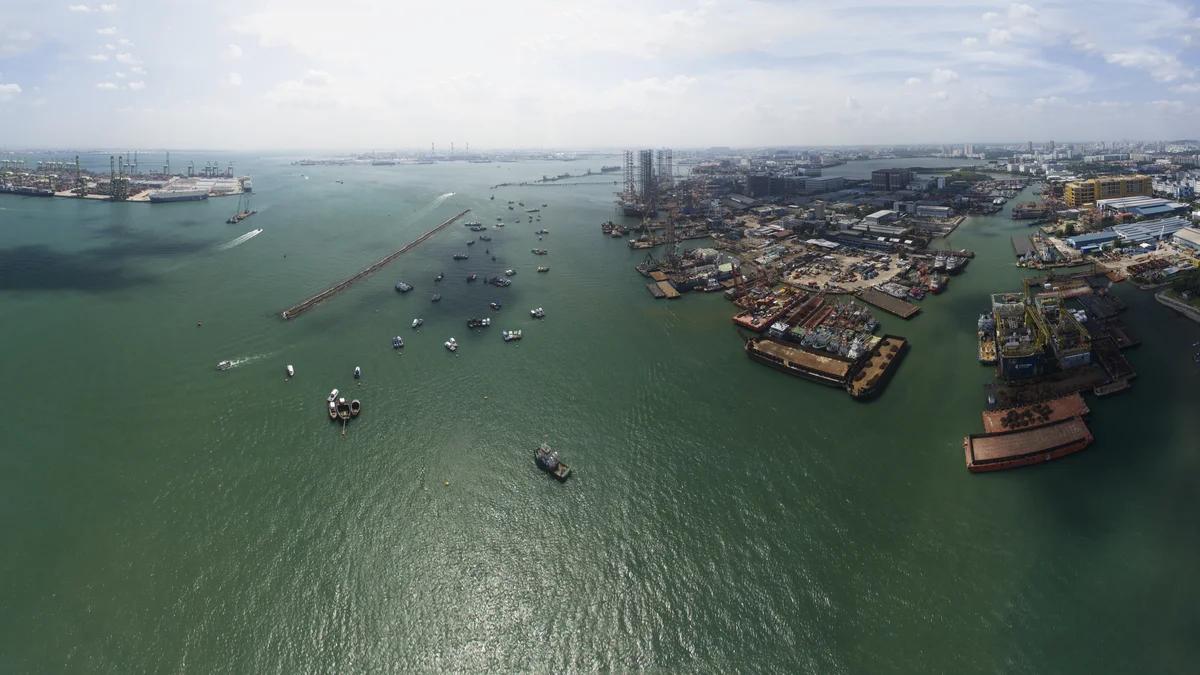
The Malacca and Singapore Straits represent the most strategically vital commercial chokepoints on the planet: more than one hundred thousand commercial merchant vessels transit these narrow territorial waters each year, carrying over forty percent of global maritime trade, sixty-five percent of petroleum imports consumed by East Asian industrial powerhouses, and trillions of dollars in containerized consumer electronics. Over the past twenty-four months, regional coast guards have tracked a surge in coordinated piratical boarding attempts, illegal transponder-dark dredging operations, and clandestine underwater infrastructure sabotage targeting undersea fiber-optic telecommunications backbones.
Under the terms of the treaty, signatory nations will establish a permanent Joint Autonomous Maritime Operations Center (JAMOC) headquartered in Singapore. The center will synchronize telemetry from sixty commercial autonomous surface interceptor vessels equipped with synthetic aperture radar, electro-optical day/night infrared tracking pods, and encrypted quantum-resistant satellite relays, maintaining continuous 360-degree situational awareness across the entire 500-mile length of the strait corridor.
Autonomous Fleet Interoperability and Deterrence
"By integrating uncrewed surveillance platforms with shared multilateral maritime data-sharing architectures, we remove the blind spots that predatory actors rely upon to conduct illicit operations," stated Singaporean Defense Minister Ng Eng Hen during the inaugural commissioning ceremony. "This treaty affirms that the safeguarding of global sea lanes is a shared international obligation grounded in the United Nations Convention on the Law of the Sea (UNCLOS)."
The autonomous patrol vessels, manufactured by commercial maritime innovators in the United States, Japan, and Australia, operate on hybrid hydrogen-electric powertrains capable of remaining on active patrol for up to forty-five consecutive days without refueling. While the uncrewed craft are strictly non-kinetic and operate without onboard lethal ordnance, they are programmed to automatically deploy non-lethal acoustic hailing devices, laser optical dazzlers, and entanglement nets to disable the engines of hostile pirate craft and rogue boarding parties.
Diplomatic Repercussions and Freedom of Navigation
Diplomatic observers noted that while the pact is framed primarily around anti-piracy, counter-smuggling, and environmental maritime rescue, the architecture provides a potent, legally unassailable deterrent against regional gray-zone maritime militarization. By establishing automated digital logs of every vessel transit recorded on an immutable, shared public ledger, the coalition permanently neutralizes attempts by foreign state-sponsored maritime militias to assert unlawful territorial sovereignty over international navigation channels.
The deployment of the initial thirty autonomous patrol vessels will commence on January 15, 2027, with full operational capability projected before the mid-year monsoon season. Shipping insurance syndicates at Lloyd's of London responded to the treaty announcement by signaling potential downward adjustments in marine war-risk insurance premiums for commercial vessels transiting the strait, marking an immediate economic dividend for global supply chain stability.