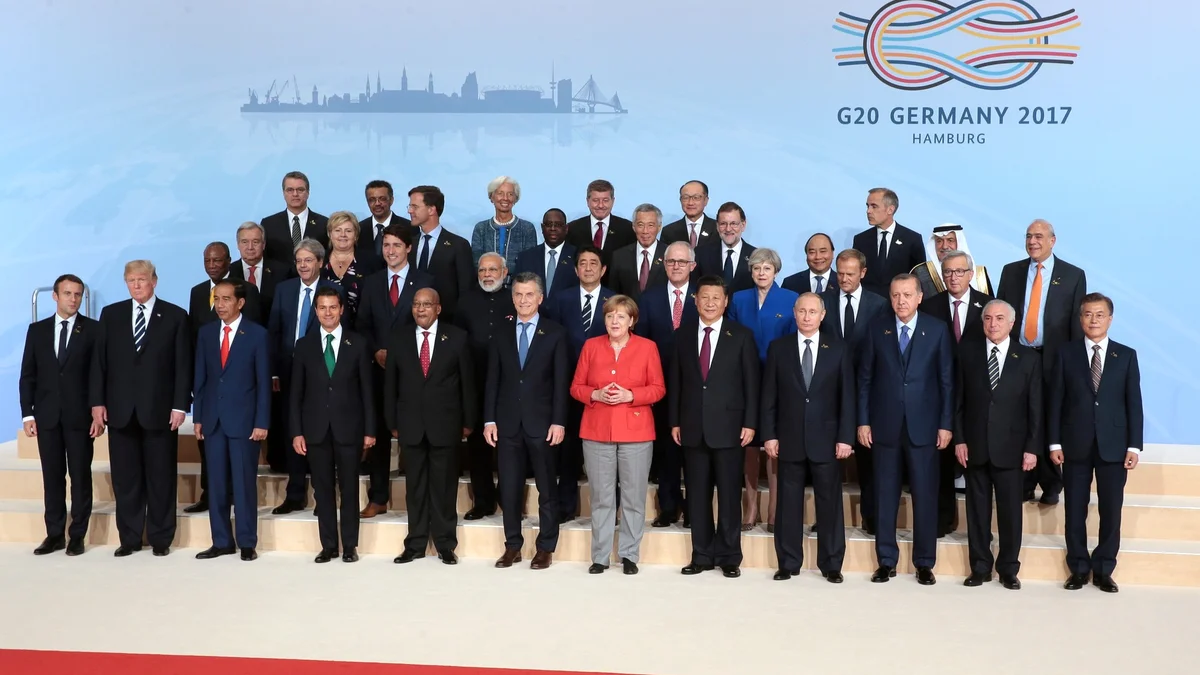
High-stakes technology diplomacy took center stage at the Asia-Pacific Economic Cooperation (APEC) leaders' summit in Shenzhen on Thursday as United States President Donald Trump, Chinese President Xi Jinping, and Pacific Rim heads of state articulated starkly divergent visions regarding the international regulation, export control, and sovereign governance of advanced artificial intelligence.
Addressing an assembly of global chief executives and foreign ministers in China's foremost tech metropolis, President Trump delivered an uncompromising critique of multilateral regulatory frameworks, arguing that international treaties attempting to establish centralized safety standards risk suffocating the entrepreneurial dynamism that drives breakthrough technological innovation.
The American Stance: Deregulation and National Technological Primacy
"The United States will never surrender our technological innovation to bureaucratic globalist committees or supranational regulatory bodies," President Trump declared during an APEC plenary session. "Artificial intelligence is a transformative economic and industrial blessing. While there are minor practical risks that individual sovereign nations must manage within their own borders, AI is fundamentally and overwhelmingly a force for good. Those who seek to tie down technology with international red tape are merely attempting to slow down American ingenuity."
Trump's remarks underscored Washington's strategy of pairing domestic technological deregulation with aggressive unilateral trade barriers, pointing to recent Commerce Department enforcement rules that restrict the export of cutting-edge AI accelerators and high-bandwidth memory chips to strategic competitors.
Multilateral Counter-Pushes and the Call for Red Lines
In contrast, Chinese leadership and European observer envoys advocated for an internationally coordinated governance regime anchored within United Nations bodies. President Xi emphasized that unfettered algorithmic deployment in critical infrastructure, autonomous weapons platforms, and financial networks poses systemic planetary risks that demand universal red lines.
"Technological advancement should serve the common well-being of all humanity rather than becoming an arena for exclusive spheres of influence or zero-sum digital dominance," President Xi remarked during his keynote. "China supports establishing multilateral consensus under the UN framework to ensure that artificial intelligence remains safe, controllable, and equitably shared across developing and developed nations alike."
Tech policy analysts and corporate attendees noted that the summit dialogue makes clear that the world has entered an era of technological fragmentation, where competing regulatory philosophies and hardware supply chains are dividing the global digital architecture into distinct hemispheric spheres.