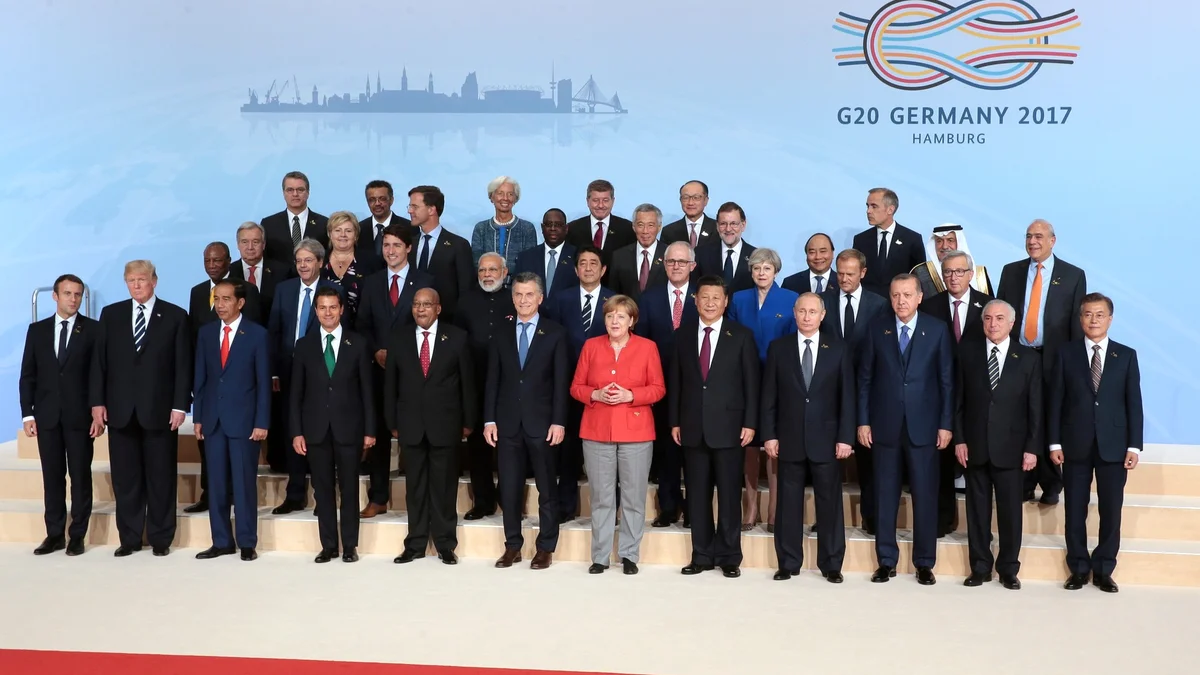
The White House sent diplomatic reverberations across the globe on Saturday by officially confirming that President Donald Trump will participate in an unprecedented three-way summit with Russian President Vladimir Putin and Chinese President Xi Jinping. The landmark meeting is scheduled for Thursday, November 19, 2026, on the sidelines of the Asia-Pacific Economic Cooperation (APEC) leaders' gathering in Shenzhen, China.
The announcement represents the first simultaneous summit between the leaders of the United States, the Russian Federation, and the People's Republic of China in modern diplomatic history. White House national security aides indicated that the trilateral discussions were arranged through months of sensitive back-channel communications handled by special presidential envoys, seeking to establish a new strategic equilibrium among the world's premier nuclear superpowers.
Focus on Strategic Nuclear Arms and Regional Non-Proliferation
According to formal administration briefings, President Trump intends to anchor the Shenzhen agenda around establishing a comprehensive multilateral framework for global nuclear-arms reductions. With bilateral arms control pacts having expired or unraveled in recent years, U.S. negotiators argue that any meaningful twenty-first-century strategic stability treaty must encompass Beijing's rapidly modernizing nuclear arsenal alongside Washington and Moscow's established strategic stockpiles.
Administration officials also disclosed that the trilateral talks will address escalating security tensions surrounding Iran's nuclear enrichment capabilities, following Washington's decision earlier this week to suspend direct bilateral talks with Tehran. However, U.S. spokespersons pointedly clarified that the Shenzhen summit agenda will not focus on resolving the ongoing Russia-Ukraine war, a diplomatic carve-out designed to reassure nervous European allies who feared separate superpower accommodations behind closed doors.
"President Trump's goal is to prevent a catastrophic global arms race that squanders trillions of dollars and places humanity under permanent existential threat," senior White House advisors told foreign policy correspondents. "Direct engagement at the highest level is the only mechanism capable of breaking bureaucratic geopolitical deadlocks."
Allied Reassurance and Domestic Political Reactions
European capitals responded to the summit announcement with guarded anticipation. German Chancellor Friedrich Merz and French diplomatic officials expressed relief that Ukrainian sovereignty negotiations remain sequestered within separate multinational tracks in Abu Dhabi, while emphasizing that European security interests must not be compromised in bilateral superpower horse-trading.
In Washington, congressional reactions fell along sharp partisan lines. Republican lawmakers praised the president's audacious personal diplomacy as proof of peace through strength, arguing that bringing Moscow and Beijing to the bargaining table together demonstrates American leadership. Conversely, incoming Democratic committee chairs cautioned that previous high-visibility summits often yielded symbolic communiqués without verifiable compliance protocols, pledging to hold rigorous oversight hearings regarding any commitments made in Shenzhen.