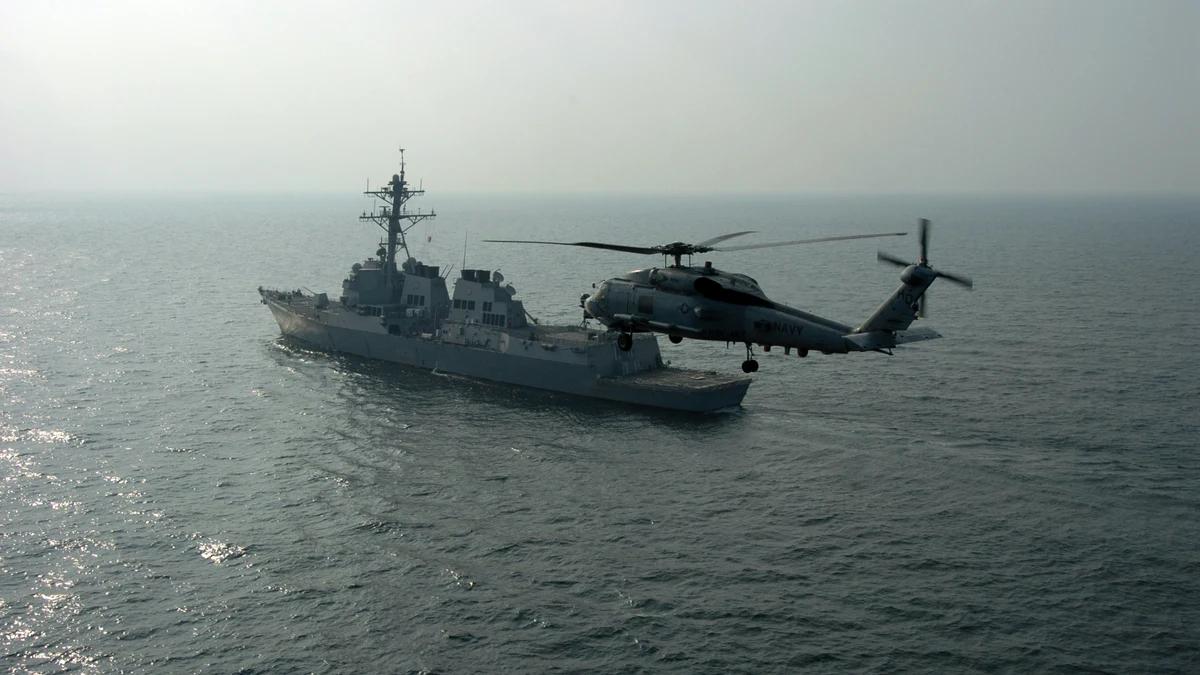
Maritime security in the world's most critical energy transit artery deteriorated precipitously over the weekend as multiple commercial crude oil tankers suffered severe hull damage and localized fires after striking submerged naval mines along the southern maritime approaches to the Strait of Hormuz.
According to alerts issued by the United Kingdom Maritime Trade Operations (UKMTO) and regional coast guard authorities, the blasts struck at least two laden vessels—including a Very Large Crude Carrier (VLCC) carrying over two million barrels of crude oil—operating in international shipping lanes south of the Omani coastline. While emergency damage-control teams aboard the vessels successfully contained the blazes without catastrophic oil spills or crew fatalities, the deliberate placement of naval mines has triggered panic across commercial maritime insurance syndicates.
Iranian Claims and US Naval Blockade Operations
Iran's Islamic Revolutionary Guard Corps (IRGC) Navy issued inflammatory statements on Monday claiming responsibility for mining unauthorized transit lanes, asserting that commercial shipping attempting to circumvent regional security checkpoints would face physical interdiction. Iranian military spokespersons claimed that as many as six commercial vessels had been impacted over a forty-eight-hour period.
The United States Central Command (CENTCOM) and U.S. Navy 5th Fleet, operating out of Bahrain, forcefully condemned the mining as an unlawful act of state-sponsored terror against civilian maritime commerce. U.S. naval forces immediately deployed MH-53E Sea Dragon airborne mine-countermeasures helicopters and autonomous underwater unmanned search vehicles to sweep primary navigational channels, while guided-missile destroyers established armed escort perimeters for stranded merchant shipping.
"Laying indiscriminate naval mines in international commercial waters is a flagrant violation of the law of the sea that endangers innocent seafarers and global commerce," CENTCOM commanders stated in an operational update. "The United States Navy and allied coalition partners are utilizing every counter-mine asset in theater to clear shipping corridors and ensure freedom of navigation."
Energy Markets Juggle Localized Shocks Against Global Surplus
The explosions have injected severe friction into physical crude logistics. Lloyd's of London underwriters suspended standard war-risk insurance binders for vessels transiting the Persian Gulf, demanding exorbitant breach surcharges that effectively halted unescorted tanker movements out of regional export terminals.
However, global crude benchmark futures responded with surprising restraint. While spot freight rates and regional crack spreads spiked sharply, international oil prices remained capped near $96 per barrel following a new report from the International Energy Agency (IEA) confirming that soaring non-OPEC production from the United States, Guyana, and Brazil has returned global oil markets to an overall supply surplus, providing an unprecedented cushion against Middle Eastern transit disruptions.